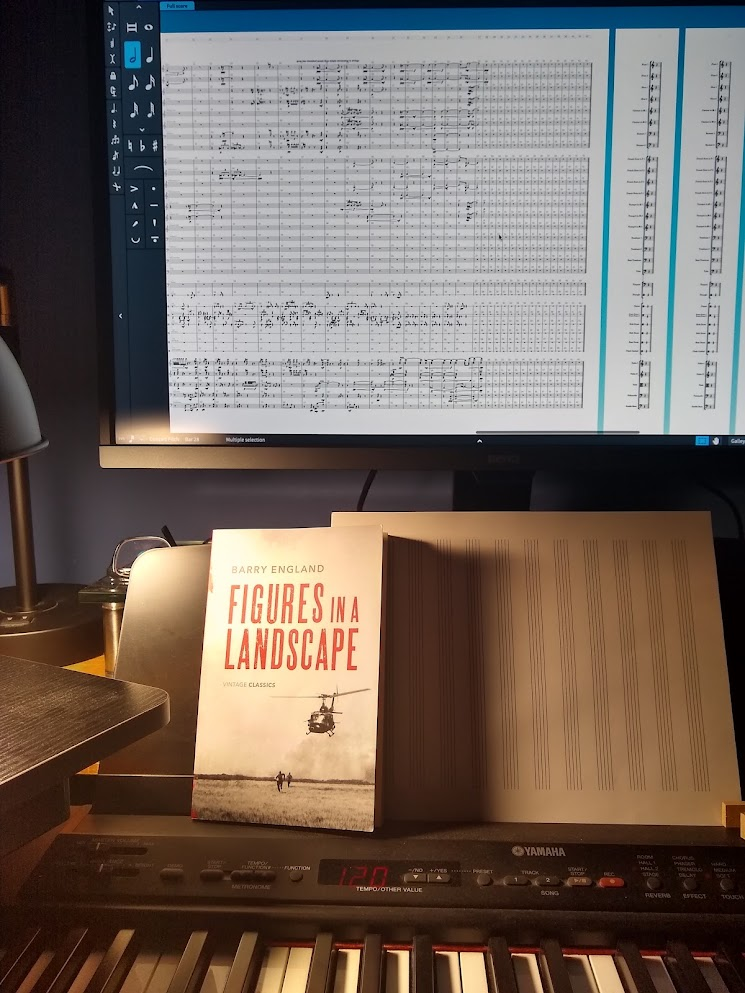
Printed public domain sheet music

Twice recently I’ve ordered sheet music for scores that are in the public domain. One for Bach’s Musical Offering and one (well, two) for the Sibelius Symphony No. 5, the full orchestral score and the piano reduction.

The Bach work is one I often listen to, passively but with inevitable moments of actively, and it’s also a notable work of creative notation. I wanted to look at the structure of the Ricercar a 6 which is a six-voice fugue performed (most of the time?) on keyboard–ouch!–but each piece in the set has its own interesting characteristics. I listened to the Kuijken/Kohnen/Leonhardt recording from 1975 growing up and so is the “official” one to my ear.

I’ve wanted to study the Sibelius symphony–considered one of the greatest symphonies ever written, ymmv–ever since I started working with orchestral composition. Public domain rules are byzantine and generally I think a score needs to be around 70 years old before it becomes available. Older scores I’ve looked at are notoriously badly edited (with questionable phrase markings or capricious choices of accidentals or just misprints, though not seeing more curated versions I may be wrong), so to mitigate any weirdness in the orchestral score I also got the piano reduction.

Continue reading Printed public domain sheet music
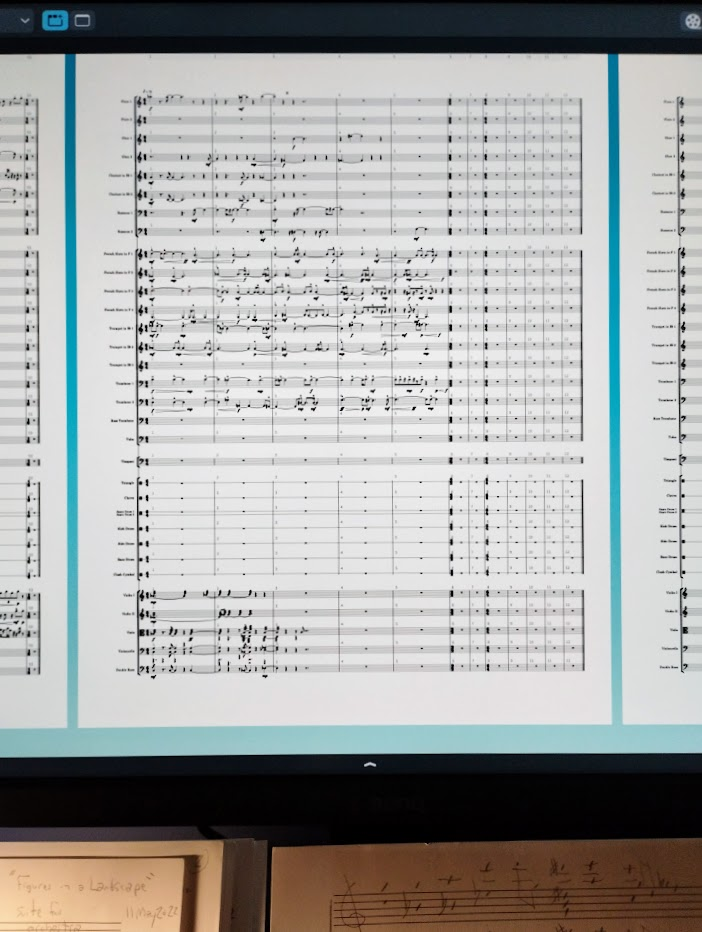
Suite for Orchestra, “Figures in a Landscape”–Working with limited resources

I’ve just started the 5th movement, Fire, in which our heroes are trapped in a conflagration in the field of local villagers. (In my research notes, I have it covering pages 94-115 of the 2020 Penguin/Vintage edition I use as reference.) At this point I am struggling with the idea of program music in contrast with soundtracks. A few months back I had an abbreviated, stumbling Twitter conversation with an individual Much Better Informed but we ended up having the same opinions of soundtracks-as-pure-music. That is: a low one. In these days of a renaissance of quality composers, it’s admittedly a bit unpopular to get all academically scoffy about music written for movies.

5th movement, Fire
Continue reading Suite for Orchestra, “Figures in a Landscape”–Working with limited resources

Three new paintings that I’ve purchased from an English artist

I became interested in the genre of New Complexity in modern music, then became familiar with the Major Names of that genre in both composition and performance along with those I appreciated the most, then–this being the world that it is–found that some of those Major Names are online, then I “kept informed” on social media of those that are active on social media. (Side note: I often contemplate with the gravity of history the fact that as a boy of five or nine I could have met Stravinsky or Shostakovich, respectively, despite my oblivious and underserving status at the time and their importance to me today.)

Ian Pace is a pianist and composer (see A week of “The History of Photography in Sound”) who is one of the above artists who are active online and who has at several times referenced the artist and composer Jim Aitchison. Mr. Pace had commissioned several works from Aitchison and posted photos and, though I can’t find those posts right now, they resonated strongly.

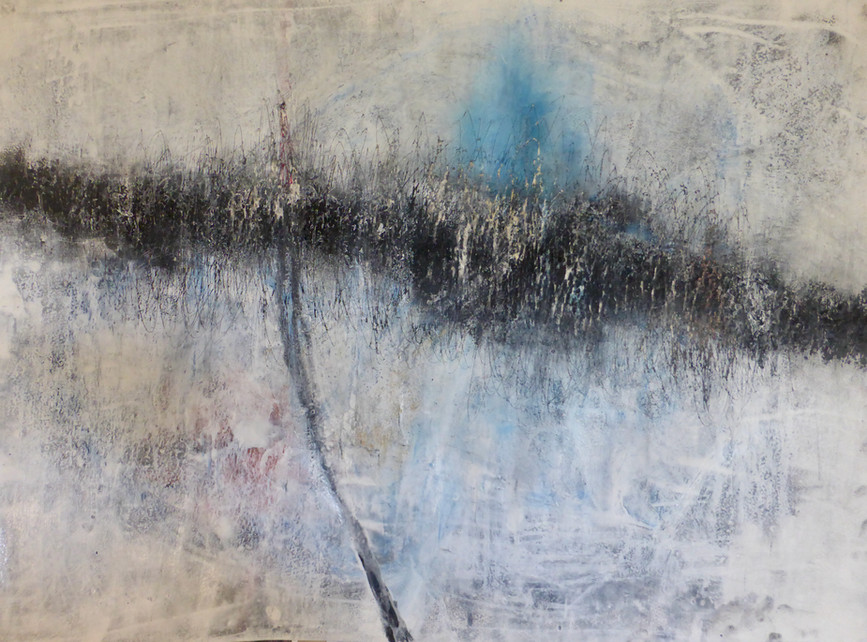
Jim Aitchison, Architecture of Landscape (psychiatric hospital and gallery), oil pastel, ink, and acrylic on heavy paper, ca. 2021
Continue reading Three new paintings that I’ve purchased from an English artist

Suite for Orchestra, “Figures in a Landscape”–Writing for untuned percussion

One lesson I learned back in 2019 when I was experimenting with orchestral writing was that–one personal revelation that is–I love writing for percussion. From college-and-after-days I’d always admired the drummer and their skill of body-wise coordination rather than hand coordination; admired it likely because it was simply of equal competency to a pianist yet foreign. And that sounds really arrogant, but I think it’s just more naivety of the percussionists’ milieu. No offense, but you’re awesome.

The current state of the second movement, Village I from Suite for Orchestra, “Figures in a Landscape”
Continue reading Suite for Orchestra, “Figures in a Landscape”–Writing for untuned percussion