The software industry has become a pretty immoral bunch of assholes, but the software industry married to the new AI revolution has exceeded this baseline immorality.
I’m a Malcolm Gladwell-y maven, or I aspire to be, w/r/t technology and it was a trip to Italy with the family several years back that gave me an opportunity to press to them the importance of what was coming and the importance that they, disregarding their disinterest or disgust, involve themselves with LLMs directly in order to understand how the world was going to change. I knew there was value there but I also understood that there was existential upheaval. Maybe they already knew that; I’m not sure.
For most of the time after that I’ve sworn off ChatGPT (let’s use the Kleenex-ified terms “ChatGPT” for the technical “LLM”). Its harm to the environment and social equality, and the socially inequitable harm that it causes, is horrifying. (Though, admittedly, extreme statements should generally be responded with doubt and verification.

I’d recently missed what was apparently a not-to-be-missed post by a well-respected and seasoned developer describing his recent development of a framework for ChatGPT [ed. and its ilk] called Welcome to Gas Town. His logic is absolutely correct:
- These tools will do work for us,
- We can then do other work,
- We should have those tools do that other work,
- #1
Without getting into his crushingly detailed explanation, what he did was create a robot community, of sorts, for him to throw tasks at and for them to solve like monkeys and Shakespeare. It’s amazing the Rube Goldberg-ness of the homunculus that is created by the machine that he describes and that he describes with admiration. Throughout the essay he admits that the software product of the machine he has created is unreliable and un-fixable by humans, yet he insists that it’s unfixable-fixability by more ChatGPT is value enough.
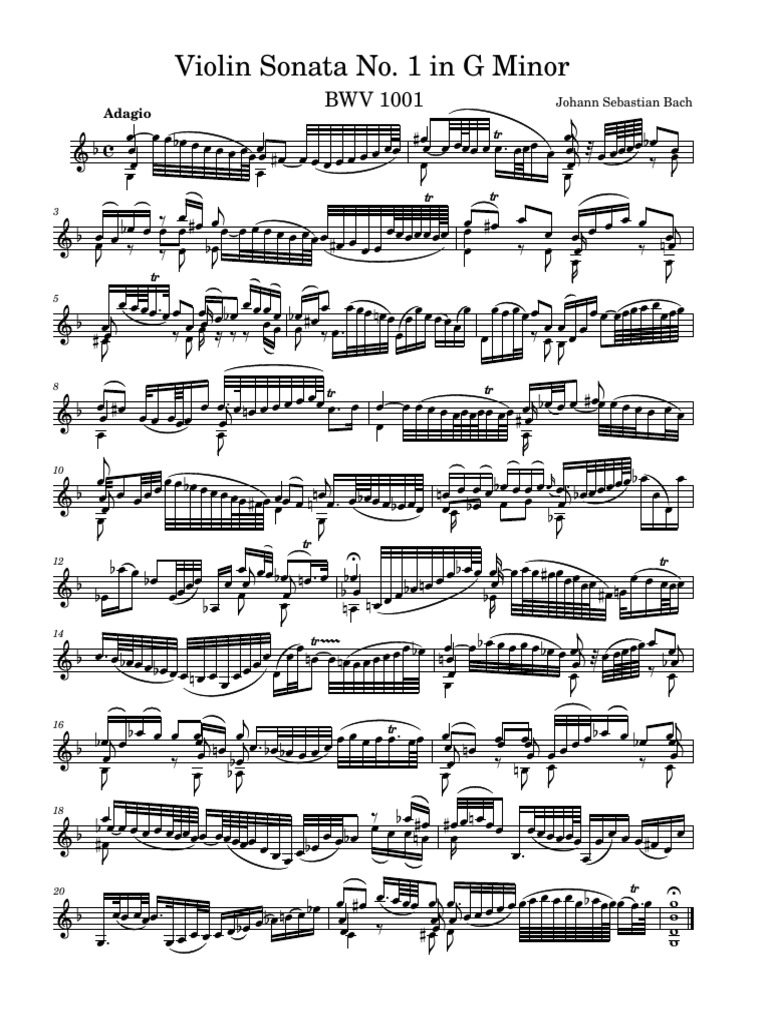
[side note, apropos of everything: white writing some of this I’m watching Hilary Hahn, though it could be anyone, performing a movement from a Bach sonata for violin.]
I cannot express enough just how absurdly complex the system–intended to create applications that have as of this point been created, often, by individuals–is. The complexity is matched only by its unreliability, which he points out repeatedly. It’s also important to note the tone of his essay. It contains from the start a tone of satire paired with earnestness; it is as if he realizes his true love of the potential of ChatGPT is absurd on its face, and what he has created–almost beyond complex–is absurd and that he must hide this absurdity with self-deprecating pejoratives.
As with most everything in the past 5-or-so years: it was demoralizing to hear a respected voice start proselytizing fundamentalist dogma.
One of my favorite newsletters is Garbage Day. The author had recently read the Gas Town article (not being a techie, he was a little lost) and decided to try his hand at vibe coding. To be clear: this was vibe coding from a non-coder. But we get to the point. Or at least “a” point. If vibe coding is to open the industry up to the un-(traditionally)-skilled then that is one role: and distinct. If it is to make the skilled centaurs, then…
I’m talking around the issue: ChatGPT destroys the environment and focuses that destruction on society’s poor. Everything else is sophistry. I could reference analysis and opinion pieces and theory, but that’s where we are. The tech industry needs to rediscover its morality or create a heart to begin with if it never had one.